Exploring the Meaning of Consciousness
Devin
11/18/20255 min read
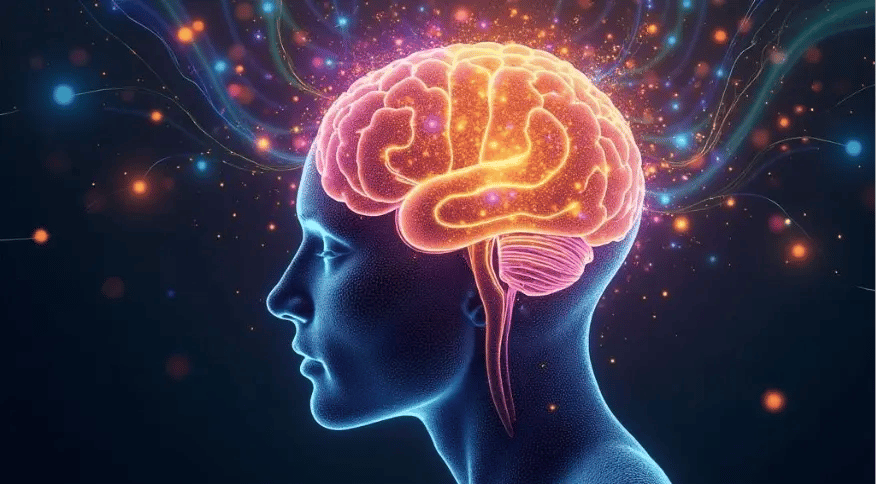
What Is Consciousness, Really?
There's a fascinating experience we all have throughout our day, but it's surprisingly difficult to explain. It's there when you're sipping your morning coffee, engaging in a conversation, or reflecting on an important decision. Yet most people take it for granted without fully understanding what it really is. This blog series invites you on a journey to explore one of the most captivating questions humanity has ever asked. We'll build our understanding from the ground up. Starting with the basics, exploring different perspectives, and gradually revealing deeper layers of insight. By the end, you'll discover that what you've been experiencing all along has profound implications for how we understand ourselves, other beings, and the world around us.
What Everyone Experiences Every Single Day
There are certain things we all go through that form the foundation of our human experience. You might be sitting at your desk right now, reading these words. You can probably feel the chair beneath you, hear sounds around you, and sense your own thoughts moving through your mind. That act of knowing you're doing these things. That's what we're going to explore.
For centuries, scientists, philosophers, and thoughtful people across all cultures have tried to understand this fundamental aspect of being alive. They've used different words, approached it from different angles, and built different theories. But at its core, there's something universal: the experience of being aware.
This experience has two main facets. First, there's your awareness of the world around you. The sights, sounds, sensations, and inputs streaming in constantly. Second, there's your awareness of your own inner world. Your thoughts, emotions, memories, and that sense of being you, distinct from everyone else.
Think about it this way: you can react to something without really thinking about it (touching a hot stove), or you can contemplate something deeply (wondering about your purpose in life). Both are part of the same phenomenon, just at different levels of complexity.
Where Does This Ability to Be Aware Come From?
This is where the investigation becomes truly interesting. Experts have developed several perspectives on this question:
The Biological Perspective suggests that this ability emerges from the physical brain. Researchers in neuroscience have observed that when specific brain areas coordinate with each other, exchanging signals and chemical messages. Something remarkable happens, awareness arises. They can observe these processes using advanced imaging technology and identify patterns associated with different types of experiences.
The Philosophical Perspective takes a different approach. Some thinkers propose that this experience of awareness might be more than just physical brain activity. They argue that the subjective feeling of being alive cannot be fully reduced to neurons firing in our skulls. There's something about the experience itself that seems to require a deeper explanation.
The Complexity Perspective presents an intriguing middle ground. Many researchers propose that awareness emerges when a system becomes sufficiently complex and interconnected. Imagine a single neuron or computer, it simply processes information. But connect billions of them together in the right way, and suddenly something new appears.
The capacity to reflect, to know that you know, to be aware of your own awareness.
This mystery has even captivated science fiction writers and futurists, who explore thought-provoking questions.
Could other forms of life eventually develop this capacity?
Could machines ever experience genuine awareness?
These creative explorations often hint at deeper scientific curiosities.
Why Is This Question So Difficult to Answer?
The challenge here is profound. Scientists and philosophers call this the "hard problem"
And it's not a problem they're trying to solve the way you'd solve a math equation.
Here lies the ultimate riddle. We can construct a machine that dodges obstacles, holds a conversation, and adapts to fresh challenges. But does it actually feel anything? Is there a silent observer behind those circuits? The profound mystery is found not in the ability to simulate intelligence, but in the vast chasm between mimicking awareness and truly experiencing existence.
Another challenge is that consciousness is deeply personal and subjective. You can describe your experience; how you feel, what you see, what emotions you have; but I can only take your word for it. I can't step inside your mind and directly experience what you experience. Across different cultures, backgrounds, and life experiences, people describe their awareness in remarkably different ways. One person's experience of reality, pain, or a dream might be fundamentally different from another's.
This subjectivity makes it difficult to establish universal rules about how this works. Different approaches measure and interpret these experiences differently, which means that building one comprehensive theory that satisfies everyone remains elusive.
Building a Shared Framework:
The Key Dimensions
To understand this phenomenon better, researchers have identified different dimensions that help us talk about it more clearly:
Wakefulness refers to the basic state of being awake versus asleep, under anesthesia, or unconscious. But even this distinction gets complicated when you consider that there are different degrees of wakefulness. Moments when you're drowsy, alert, or fully engaged.
Sensory Awareness is your perception of the external world, noticing the color of the sky, the taste of your food, the texture of fabric, the sound of a voice. It's the constant stream of information your senses are processing.
Self-Recognition is the ability to understand yourself as a separate individual, distinct from everyone and everything else. You experience this when you catch your reflection and know it's you, or when you think about your own thoughts.
Reflective Thinking takes it a step further. The ability to think about your thinking, to reflect on your emotions, to plan for the future, to understand why you feel a certain way. This capacity underlies planning, creativity, innovation, and empathy toward others.
Scientists are using increasingly sophisticated tools to identify which areas of the brain light up during these different types of experiences. Some researchers even study people in meditation or trance states to understand how awareness can shift and transform.
Your Invitation to Keep Reading
Here's where your journey with this series truly begins. Now that you have a foundation. an Understanding of what we're talking about and why it matters. We're ready to explore the deeper questions together.
In upcoming posts, we'll examine the various scientific and philosophical theories that attempt to explain this phenomenon. We'll investigate some surprising discoveries about animals and their awareness. We'll explore what happens to our experience during dreams, meditation, and altered states. And we'll confront some of the most profound questions about consciousness that challenge how we think about intelligence, responsibility, and what it means to be truly alive.
The journey of understanding consciousness is not just an intellectual exercise. It's deeply personal. It touches on questions of meaning, identity, and our relationship to the world and to each other. By building this understanding together; starting with what we all know and gradually revealing what researchers are discovering; you'll gain insights that can transform how you relate to yourself and others.
Exploring the Meaning of Consciousness



© 2026. All rights reserved.